
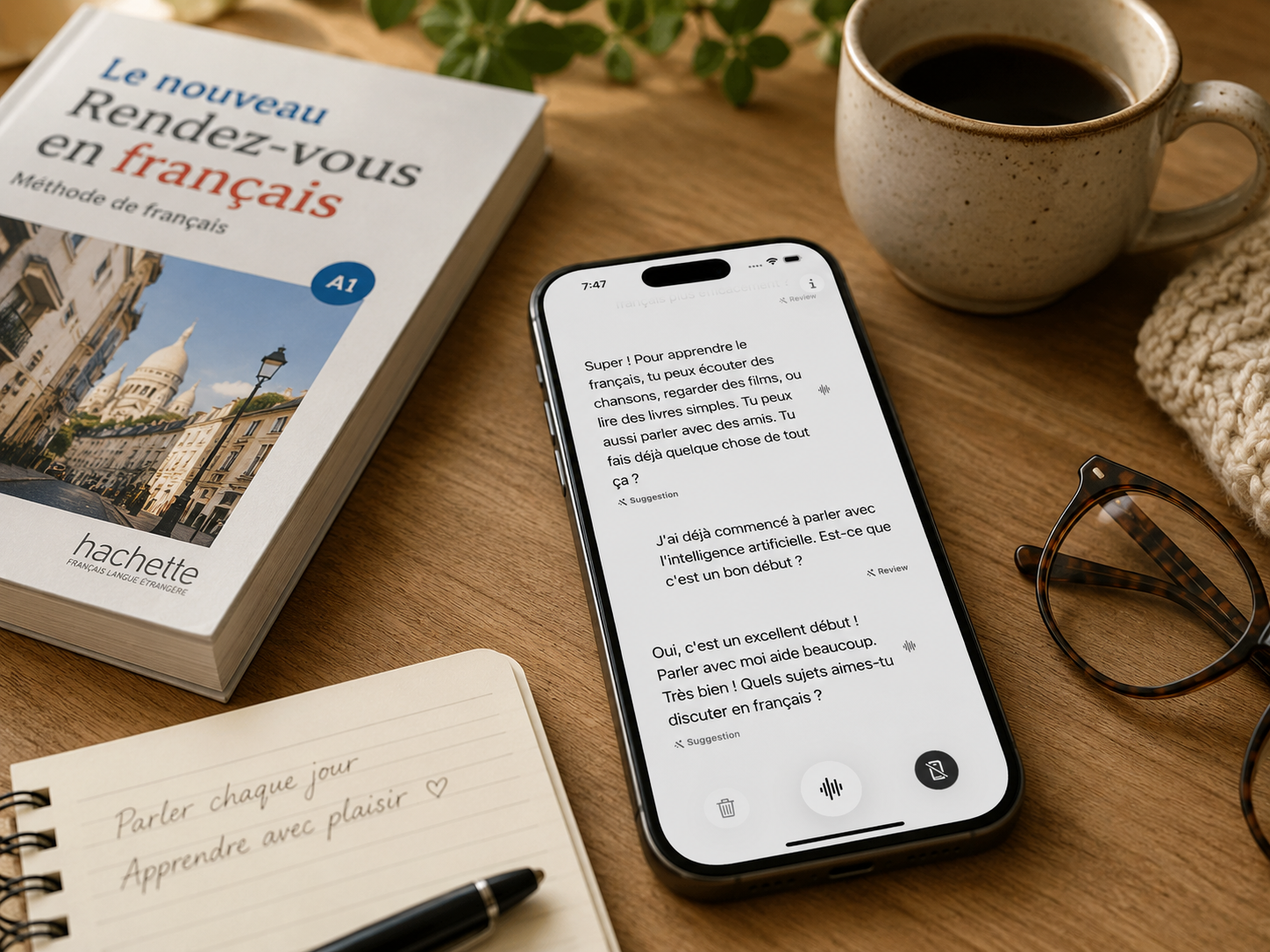
You can know plenty of French and still freeze when it is time to speak. That gap is normal: understanding a language and producing it in real time are different skills. The most reliable way across is not another long study session. It is a small amount of speaking that you can repeat every day.
Consistency matters more than a perfect session
A daily speaking habit should feel easy to begin. If every session needs a teacher, a prepared lesson, and thirty quiet minutes, practice will disappear as soon as the week gets busy. A useful routine works on an ordinary day.
Start with ten minutes. That is enough time to warm up, answer a few questions, notice one thing to improve, and finish before the session becomes heavy. When you have more energy, keep going. When you do not, ten minutes still counts.
A simple rule: choose a routine you could still complete on your busiest weekday. You can always add more practice, the first goal is making it easy to return.
A ten-minute French speaking routine
You do not need a new plan every day. Use the same short structure and change only the topic.
- Warm up with something familiar. Say what day it is, how you feel, and what you have already done today. Familiar details help your voice settle into French.
- Talk about one concrete topic. Describe your plans, a meal, a recent conversation, or something you can see. Keep the subject close to your real life.
- Follow the conversation. Answer a question, ask one back, and add one extra detail. This turns isolated sentences into an exchange.
- Review one useful correction. Choose a single pronunciation point, phrase, or grammar correction to carry into tomorrow. You do not need to fix everything at once.
Choose phrases you might actually use
Broad topics such as “Talk about travel” can leave you searching for an idea before you even start speaking. Make the question smaller and more personal: Where would you go for a weekend? What would you pack? How would you ask for a train ticket?
Try talking through your morning routine, explaining what you do for work, recommending a film, ordering at a café, or describing a problem in a shop. Relevance makes vocabulary easier to remember because every phrase has somewhere to go.
Keep talking when a word disappears
Real conversation does not pause while you search for the perfect noun. Practicing recovery is part of practicing French. When a word is missing, describe its purpose, compare it with something similar, or ask for help.
Useful phrases for staying in the conversation
Comment dit-on… en français ? asks how to say something. C’est une chose qu’on utilise pour… lets you explain what an object does. Je ne connais pas le mot, mais… gives you room to describe the idea another way.
These are not emergency phrases to avoid mistakes. They are normal conversation skills. Every time you work around a missing word, you practice thinking in French instead of returning immediately to English. Keep a few options ready with this guide to what to say in French when you don’t know a word.
Use feedback without turning practice into a test
Correction is most useful when it gives the next conversation a clear focus. After speaking, look for a pattern rather than counting every error. Maybe a sound is consistently unclear, your answers stop after one sentence, or you keep reaching for the same basic verb.
Pick one adjustment and use it deliberately in your next session. Repeat a corrected phrase aloud, then change one detail and say it again. This keeps feedback connected to speaking instead of becoming another list of rules to study. When pronunciation is the pattern you want to improve, a short French shadowing routine gives you a focused way to practice the sound and rhythm again.
Make tomorrow’s session easier to start
Finish by saving one phrase you want to reuse and choosing your next topic. Before tomorrow’s conversation, use spoken active recall practice to retrieve and say that phrase without looking at the saved French. That tiny decision removes friction from tomorrow. When it is time to practice, you already know where to begin.
Daily speaking does not need to feel impressive. It needs to happen often enough that forming a sentence, hearing your own voice, and recovering from a mistake become familiar. Ten focused minutes today will do more for that skill than waiting for the perfect conversation someday.